|
THE WHALES OF TRINITY BAY!
OLD MEMORIES DIE HARD.
The whaling plant in South Dildo is a very historic and memorable place for those who worked with the whales from the 1940's to the late 1970's.
The whale factory was up and running by the early 1940's. It was started by a Norwegian whaling skipper named Captain Iverson. He came to start a cod liver oil factory but he changed his mind and decided to process whales instead.
The whalers would travel searching for the fin back, and minke whales. The fin backs were about 60 feet in length. Some of the whales brought to the South Dildo plant where as big as the boat they were brought in by.
A harpoon gun with an exploding head was used to kill this huge mammal. Some harpoons would weigh up to 50 pounds.
One single shot was not enough to kill the whale but it would injure him. Then he would usually tow the boat until he got tired. The whale was pulled in and when he got in range the killer shot would be fired. Once killed, the whale would be secured to the side of the boat and towed back to South Dildo.
The largest whale ever brought to this plant was approximately 78 feet.
There were also many pothead whale drives during those days. The men and boys would drive the whales into a panic by slapping oars on the water. This was done to drive them further towards shore.
Eventually, the whales drove themselves aground. This is where they were killed. In the fall of the year this event happened two or three times a week, hundreds of whales were killed in a drive; thousands in a year. The whale meat was then turned into mink feed.
There was steady work night and day at the whales, until the whale hunts were banned in the early 1970's. It was banned because many nations considered it inhumane.
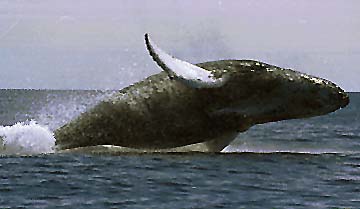
The whales have since come back to Trinity Bay. It is indeed a beautiful sight. They have found a home in what was once a killing ground for their own stock. They are in no danger now and can settle here in peace knowing that the days of cruelty are over. The memories of these whales and whale hunts, however, are still vividly alive in the minds of the whalers who once pursued it as a necessary and accepted part of their livelihood. Old memories die hard.
|